
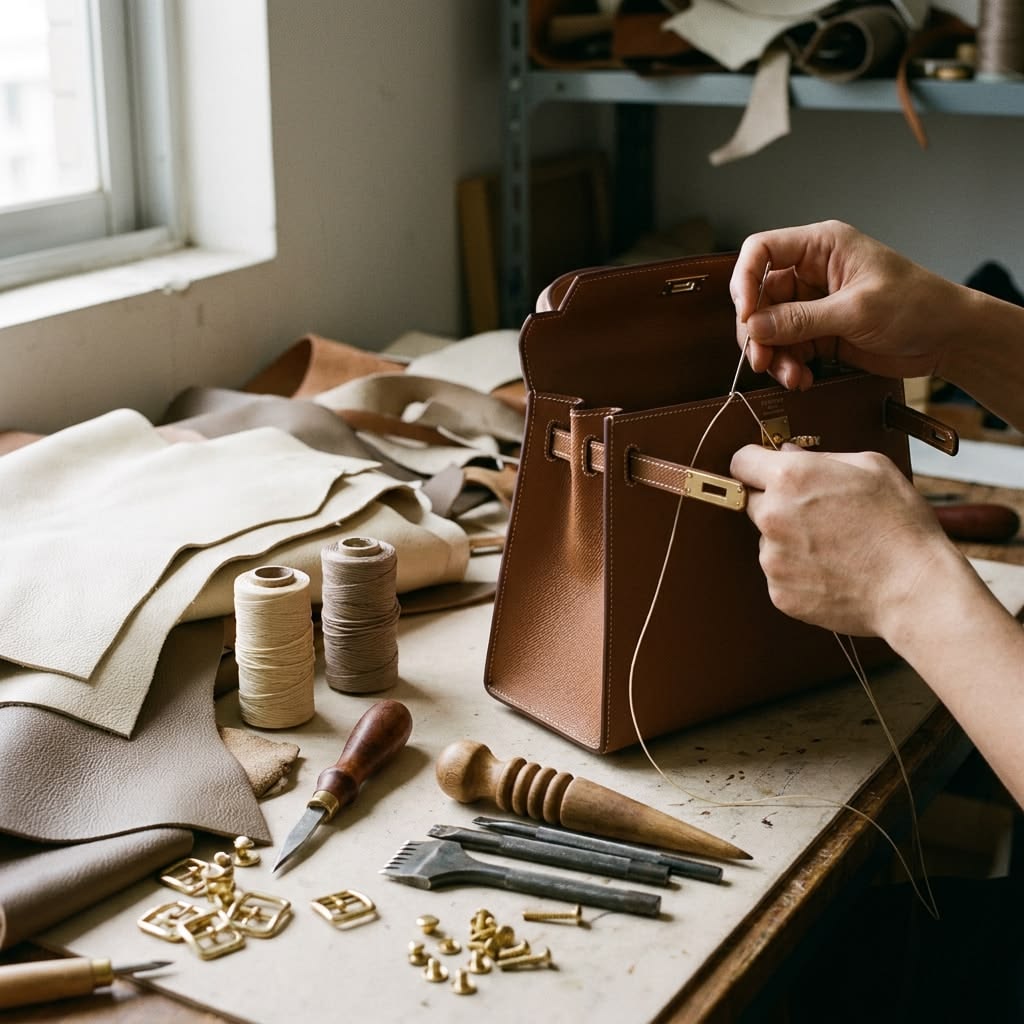
What Is the Best Leather for Making Bags?
Choosing the best leather for bag making is one of the most important decisions in developing a quality leather product. The type of leather you select influences the bag’s appearance, texture, durability, flexibility, and overall construction.
Different bag designs require different leather characteristics. A structured handbag needs material that can maintain its shape, while a soft shoulder bag may require more flexible leather. Similarly, tote bags, backpacks, and travel bags have their own material requirements.
Understanding the different leather types for bags can help you select the right material according to your design, manufacturing requirements, and intended use.
In this guide, we will explore the most commonly used leather types, compare their characteristics, and explain how to choose the right leather for different bag styles.
What Types of Leather Are Used for Making Bags?
Several types of leather are used in bag manufacturing. Each offers different surface characteristics, textures, and finishing possibilities.
The most suitable option depends on the bag’s design, desired appearance, and construction.
1. Full Grain Leather
Full grain leather is known for retaining its natural grain surface. Unlike leather that undergoes more extensive surface correction, it preserves the original grain characteristics, including natural markings and variations.
These features give every piece of leather a distinctive appearance.
Full grain leather is commonly used for premium handbags, travel bags, backpacks, and other leather accessories. Its natural character makes it a popular option for designs that highlight the material itself.
With regular use, some full grain leathers develop a patina, creating changes in their appearance over time. The final result depends on the leather quality and finishing process.
Best suited for:
-
Premium leather handbags
-
Travel bags
-
Everyday leather bags
-
Backpacks
-
Classic leather accessories
2. Top Grain Leather
Top grain leather is another popular choice in bag manufacturing. Its surface has been refined to achieve a particular appearance and finish.
Depending on the processing method, top grain leather can have a smooth, textured, embossed, or more uniform surface.
It is widely used for handbags, office bags, shoulder bags, wallets, and other leather accessories.
One of its advantages is the variety of finishes available. Manufacturers can select different surface treatments according to the product design and desired appearance.
However, the actual performance depends on the leather grade, processing, finishing, and manufacturing quality.
Best suited for:
-
Women’s handbags
-
Office and business bags
-
Shoulder bags
-
Structured handbags
-
Fashion accessories
3. Genuine Leather
Genuine leather is a commonly used term for products made from real leather. However, it is important to understand that the term does not identify a particular leather grade.
Genuine leather products can vary considerably in quality, thickness, texture, and finishing.
For bag manufacturing, buyers and manufacturers should look beyond the label and evaluate the actual material.
Factors such as the leather’s surface, construction suitability, flexibility, and finishing quality are important when selecting this material.
Best suited for:
-
Everyday handbags
-
Casual leather bags
-
Wallets and accessories
-
Different fashion bag designs
4. Suede and Nubuck Leather
Suede and nubuck are popular choices for designs that require a distinctive leather texture.
Suede has a soft, brushed surface, while nubuck features a finely sanded grain surface. Both offer a different appearance compared with smooth-finished leather.
These materials can be used for handbags, shoulder bags, casual bags, and selected fashion accessories.
However, their surfaces require appropriate care. Suede and nubuck can be more sensitive to moisture, dirt, and staining than many finished smooth leathers.
Best suited for:
-
Fashion handbags
-
Casual shoulder bags
-
Textured leather accessories
What Is the Best Leather for Making Handbags?
The best leather for making handbags depends on the style, structure, and intended use of the product.
For structured handbags, manufacturers generally look for leather with suitable firmness and thickness to help maintain the bag’s shape.
For soft handbags and slouchy shoulder bags, more flexible leather may provide a better result.
Full grain leather is worth considering when the design focuses on natural grain and leather character. Top grain leather can be a suitable choice when a refined or consistent surface finish is required.
Apart from the leather itself, other components also influence the finished handbag, including:
-
Handle construction and reinforcement
-
Inner lining material
-
Stitching quality
-
Zippers and metal hardware
-
Edge finishing
-
Interlining and structural support
A good handbag is not simply made by selecting expensive leather. The right combination of material selection, design, and manufacturing quality determines the final product.
Best Leather for Tote Bags
Tote bags are among the most versatile bag styles. They are used for shopping, office work, everyday activities, and travel.
Selecting the best leather for tote bags requires considering the bag’s size, weight capacity, and construction.
For structured tote bags, leather with suitable firmness can help maintain the overall shape. Softer tote bags may require flexible leather that allows the bag to fall naturally.
Full grain and top grain leather can both work well, depending on the desired appearance and construction.
Special attention should also be given to the handles and bottom section. Since tote bags are often designed to carry everyday essentials, handle attachment, stitching, and reinforcement play an important role in their performance.
The right leather should provide a balance between appearance, flexibility, and structural requirements.
Full Grain vs Top Grain Leather for Bags
Full grain and top grain leather are two widely used options in leather bag manufacturing. Their main difference is how the original grain surface is treated.
Full Grain Leather: Retains its natural grain surface, including natural markings and variations.
Top Grain Leather: Has a refined surface that can offer a more consistent appearance and different finishing options.
Neither option is automatically better for every bag design.
For example, full grain leather may be preferred for products where natural leather character is an important design feature.
Top grain leather may be more suitable for designs that require a specific texture, smooth finish, or uniform appearance.
The right selection depends on the product design, material specifications, finishing requirements, and intended use.
How to Choose the Right Leather for Bag Making
Before selecting leather for a new bag design, manufacturers and buyers should consider several important factors.
1. Bag Design
Start with the design and construction of the bag.
A structured handbag, soft shoulder bag, tote, and travel bag may require different leather characteristics.
The selected material should complement the design and provide the necessary support and flexibility.
2. Leather Thickness
Leather thickness affects the overall construction, weight, and feel of a bag.
A structured handbag may require different thickness specifications compared with a lightweight everyday bag.
The thickness should also be evaluated according to the handles, side panels, bottom section, and reinforcement requirements.
There is no universal thickness suitable for every bag.
3. Surface Appearance
Consider the surface finish you want for the final product.
Some designs look better with natural grain patterns, while others require a smooth, embossed, or more consistent surface.
Selecting the correct finish helps achieve the intended product appearance.
4. Flexibility and Firmness
Leather flexibility is another important factor.
Soft handbags generally require material that can bend and move naturally.
Structured bags may need firmer leather or additional internal support to maintain their shape.
The leather should be suitable for the cutting, stitching, and assembly process.
5. Intended Use
Think about how the finished bag will be used.
An everyday handbag, office bag, shopping tote, and travel bag may have different material requirements.
Consider the expected usage, carrying capacity, maintenance requirements, and overall construction before making a decision.
Common Mistakes When Choosing Leather for Bags
Selecting leather without considering its manufacturing suitability can create problems during production.
Here are some common mistakes worth avoiding:
Choosing Leather Only by Appearance: A leather sample may look attractive, but its performance during cutting, stitching, and assembly can be different.
Ignoring Thickness: Incorrect thickness can affect the bag’s weight, structure, and overall construction.
Overlooking Flexibility: Leather that is too stiff or too soft may not work well with the intended bag design.
Ignoring Surface Finishing: Different finishing processes can affect the final appearance, texture, and maintenance requirements.
Not Considering Other Components: Handles, lining, hardware, stitching, and reinforcement are essential parts of a well-constructed bag.
Evaluating these factors before production helps manufacturers achieve a more consistent and suitable finished product.
Final Thoughts
The best leather for bag making depends on the product design, intended use, desired appearance, and manufacturing requirements.
Full grain leather is a good option for designs that highlight natural grain characteristics, while top grain leather offers different surface finishing possibilities. Suede and nubuck are also useful choices for products where texture plays an important role.
When selecting leather for handbags, tote bags, backpacks, or travel accessories, always consider thickness, flexibility, surface finish, and construction.
At Ajees Leather Goods, material selection and manufacturing details are important parts of developing leather products for different designs and requirements.
Whether you are developing a new handbag collection or exploring custom leather bag manufacturing, choosing the right material is an essential step toward creating a quality finished product.

